Beyond Jawi, a plan to address cultural bankruptcy among Malays
Five decades ago, Jawi, the Arabic script which was once the main written medium for the Malay language, was replaced by the romanised script.
The Malay language progressed after this conversion. It synchronised with Bahasa Indonesia in the 1970s, giving Bahasa Melayu its value and credence, becoming one of the most spoken languages in the modern world.
Like learning Latin and Sanskrit, learning the Jawi script and knowing how its letters are strung together is additional knowledge. But that’s all to it.
I learnt Jawi in primary school. I believe I still can read and write Jawi, though there has been no need for it in the last 50 years!
Even when I was living in the Middle East, there was not a single occasion that my knowledge of Jawi had been helpful. Most locals were happy to communicate in English.
That’s an indication of how useful Jawi has been for me. As such, I fail to understand the Ministry of Education’s move to introduce Jawi, to the extent that it has now become entangled with issues of national unity.
I have no objection if the ministry is really serious in reviving Jawi writing for whatever nostalgic reasons.
But why not bring back the rest of the Malay cultural components. It would also mean lifting the ban on other forms of Malay culture and traditions.
Culture is a life experience.
Although I was born into a Pakistani family, I grew up in a Malay society, steeped in Malay traditions, practices and beliefs.
In Terengganu, I was fascinated by the “Main Pantai” festival, which had great Terengganu dishes.
The festival is held annually in May by farmers after their rice harvest.
For three nights in a row, Main Pantai would feature traditional shows such as the wayang kulit (shadow play), mak yong, menora, dikir barat, as well as Chinese opera.
My favourite was ‘Rodat Terengganu’, a show similar in its splendour and costume designs to gamelan.
The most fascinating was a troupe of bare shouldered maiden dancers.
Musical beats of rodat were much faster than gamelan and songs were rather cheeky and funny.
While the gamelan displays seriousness, both in the dance movements and lyrics, rodat is entertaining.
It is beautiful, creative, educational and motivating – all of which form an integral part of our education system.
But today, these art forms cannot be found anymore, whether in Terengganu, Kelantan or Pahang.
Gone are the people who were once masters of the arts, music and compositions. There are no more prima donnas, music schools, dance academies, theatre labs, let alone halls where cultural performances could be held in these three states.
And yet, the East Coast is referred to as the Malay heartland, where Malay heritage, including Jawi, had thrived.
The younger Malays are not exposed to these art forms anymore, and probably have never heard of them.
As a result, they would not be able to handle any complex form of artistic shows such as scripting, stage production, lighting, stage management, direction and recording.
These modern day requirements evolved from people who have a passion in artistic values.
We have totally abandoned Malay art forms. And yet, today, MOE wants to revive Jawi. It does not make any cultural sense.
MOE should study what has been lost and try to revive some of the elements that have been officially banned.
The culprit for this cultural bankruptcy are our politicians, our top civil servants, the bulk of whom are Malays.
PAS politicians, for example, cannot appreciate Malay arts, culture and traditions, and so they banned cultural shows when they took over the Terengganu state government in 1999.
Kelantan had then already banned many forms of Malay cultural shows.
Sadly, the Umno-led Barisan Nasional also followed suit.
Many present-day MPs are equally guilty of this cultural assassination. Many had been among those who campaigned heavily with a religious agenda by declaring that the Malay arts, culture, heritage and traditions are all un-Islamic.
When Dr Mahathir Mohamad assumed office in 1981, he brought in Anwar Ibrahim into Umno.
In their eagerness to trump PAS, they carried out their brand of Islamisation.
Important aspects of the Malay arts and culture were erased, some repackaged into the half-baked religious education system.
This led to the rise of superficial Malays who are not only poor in both English and Bahasa Melayu, but also ignorant about their culture and heritage.
Soon, many Malays try hard to ape the Arabs. The result is the political horror that we see today.
Malays no longer have artistic abilities and cultural skills compared to the older generations. Against this background, MoE wants to bring back Jawi.
It may be asked, why is this cultural aspect of the Malays important? As a race, we cannot escape from our own culture, traditions and heritage. The Indonesians never abandoned their culture; they are still very talented and skillful.
The future of this country lies in a cultured majority. And that group happens to be the Malays, who sadly, have been stripped bare of their own traditional values.
I’m talking about original cultural heritage, songs, dance. And yes, kebaya without headscarf, tapai and tuak.
The views expressed are those of the writer and do not necessarily reflect those of FMT.
Politiska konstnärer från konfliktdrabbade länder som Egypten och Syrien har i flera år haft möjlighet att jobba i lugn och ro i Helsingfors - utan hot om våld och förtryck. Residensverksamheten som ger konstnärer fristad får nu erkännande och pengar för år framöver.
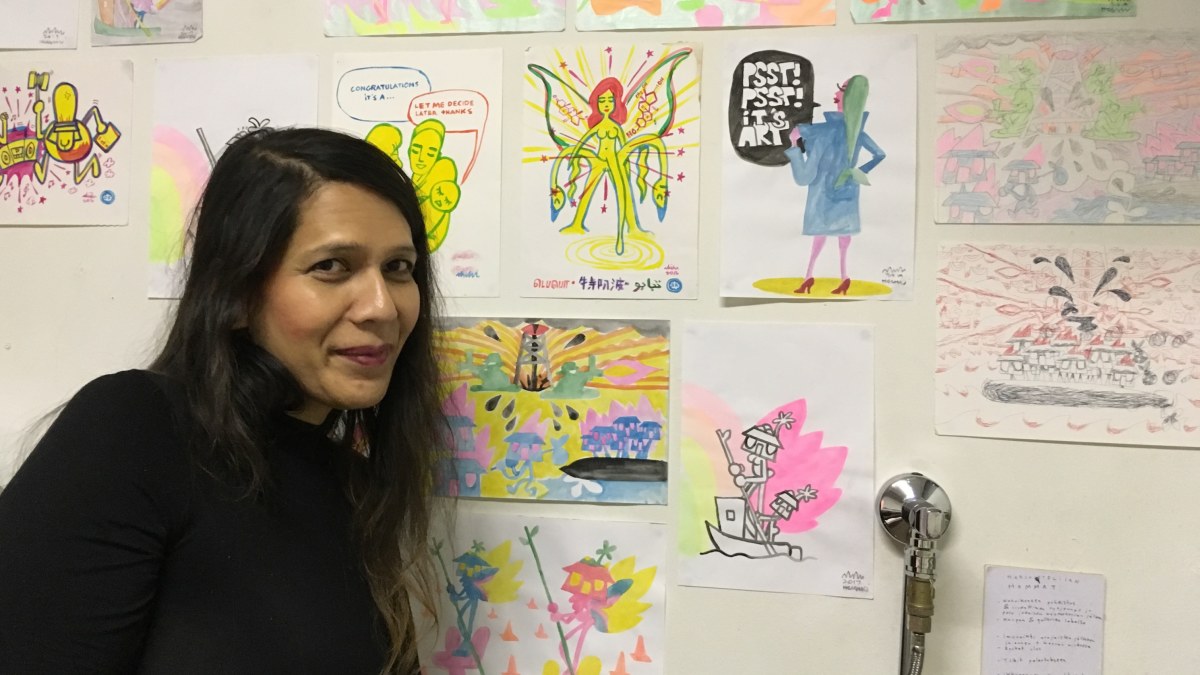
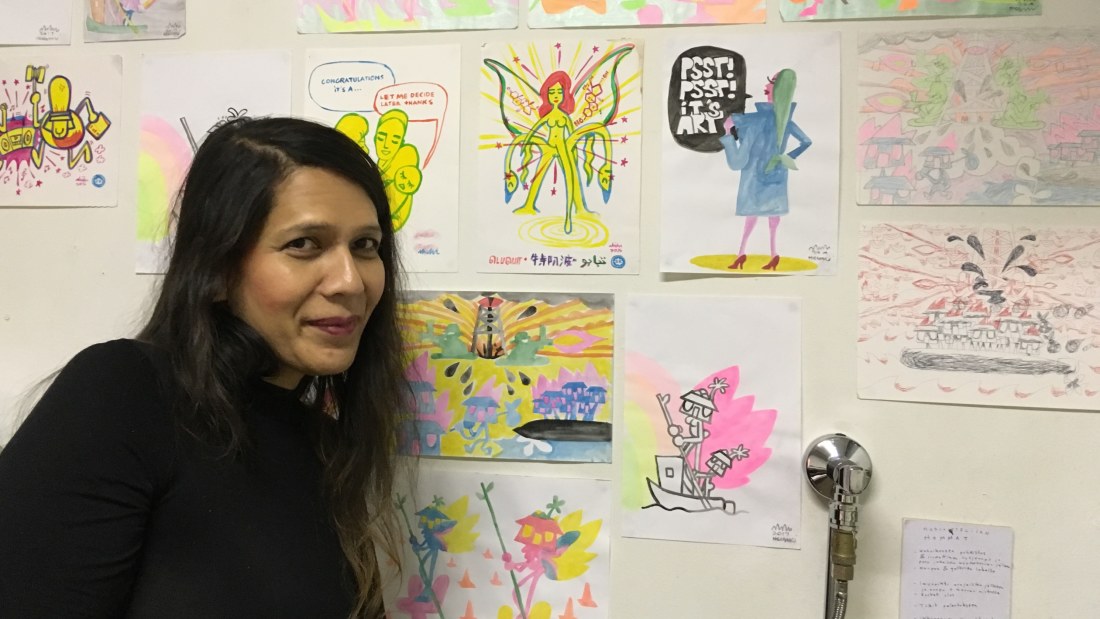
Transkvinnan Shieko Reto är hbtq-aktivist och illustratör och en av åtskilliga politiska konstnärer som har fått möjligheten att arbeta ostört i Helsingfors via organisationen Perpetuum Mobile och dess residensprogram Artists at Risk.
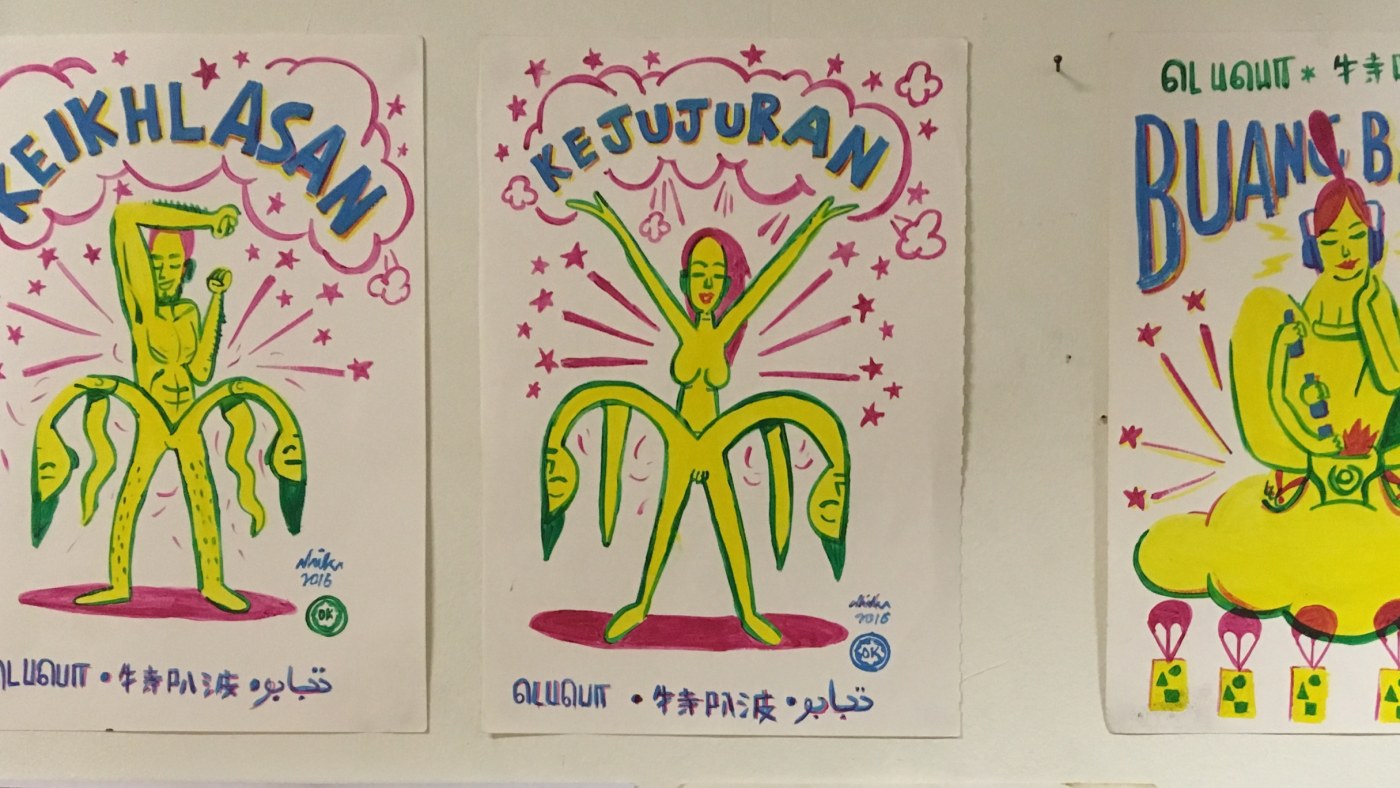
I sin konst lyfter hon fram transkönade personers liv och förtrycket mot dem i hemlandet Malaysia. I bilderna klär en kvinna av sig en mansdräkt och en man klär av sig en kvinnodräkt.
Shieko Retos illustrationer visar transpersoners verklighet.Bild: Yle / Eva Lamppu
- Sharialagen i Malaysia förbjuder transvestism och regeringen sprider kontinuerligt transfobiskt innehåll. Det är svårt att hitta jobb som transkvinna och de flesta gör sexarbete för att livnära sig, också jag, säger Reto, vars residenperiod på ett år är på slutrakan.
Det finns inte en orsak till varför politiska konstnärer vill bort från hemlandet.― Marita Muukkonen, Perpetuum Mobile
Egyptiska gatukonstnären Ganzeer var den första som kom till Finland via programmet. De följande residenkonstnärerna efter Reto har kurdisk bakgrund och kommer från Turkiet.
- Varje fall är individuellt. Det finns inte en orsak till varför politiska konstnärer vill bort från hemlandet, säger Marita Muukkonen som driver Perpetuum Mobile med kollegan Ivor Stodolsky.
Hon understryker att konstnärer i Turkiet befinner sig i ett allt mer trängt läge och flera hotas av fängelsedomar.
Fyller viktigt tomrum
Muukkonen och Stodolsky tog emot statspriset i konst i förra veckan för verksamheten kring Artists at Risk. På samma dag beviljades de en markant summa privata stipendiemedel, med vilka verksamheten ska etableras i flera städer i Europa.
- Programmet fyller ett tomrum mellan mänskliga rättigheter och konst. Liknande organisationer har arbetat med förföljda författare, vi jobbar med visuella konstnärer, säger Stodolsky.
Marita Muukkonen och Ivor Stodolsky är glada över statspriset. Erkännandet är viktigt.Bild: Yle / Eva Lamppu
Också Finland får kritik
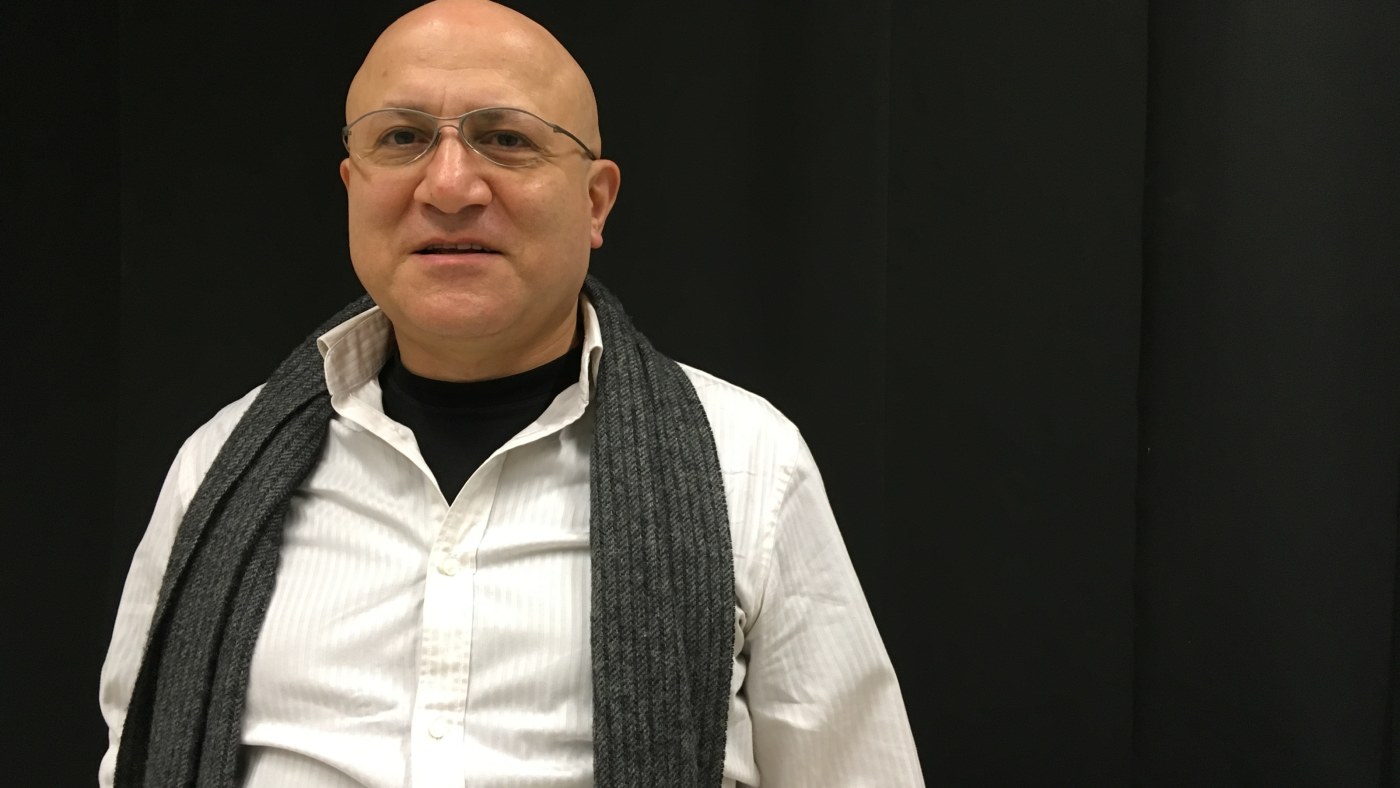
Stodolsky understryker att konstnärerna förhåller sig kritiskt till samhällen överlag, inte bara till det egna landets regering. Issa Touma, fotograf från Aleppo, kom till Finland 2014 för att kunna bevara sina arkiv när det inte fanns elektricitet i hans hemstad.
Issa Touma arbetade i Finland 2014.Bild: Yle / Eva Lamppu
I november i år återvände han hit för att hålla en föreläsning.
- När finländarna insåg att jag inte stöder den så kallade revolutionära parten i syriska kriget, drog de sig undan och ignorerade mig eftersom de inte kunde utnyttja mig för att förmedla ett visst politiskt budskap, säger Touma.
Han kritiserar västerländska och särskilt nordiska medier för partiskhet och för tystnaden som råder om situationen i Aleppo, bara ett år efter att kriget upphörde i staden.
Jag kan återvända, men i Malaysia kan jag varken gifta mig, ändra mitt namn eller mitt juridiska kön.― Sheiko Reto, aktivist och konstnär
Stodolsky vill också poängtera att residenskonstnärerna inte kommer hit för att söka asyl, eller som flyktingar. De flesta, bland annat Issa Touma, vill återvända till hemlandet för att kunna verka där.
Men Sheiko Reto tänker inte återvända till det konservativa muslimska Malaysia. Kanske blir det Japan till näst.
- Jag kan återvända, men jag gillar inte samhället och deras sätt att tänka. Jag kan varken kan gifta mig, ändra mitt namn eller mitt juridiska kön, säger Reto.
Migration är ett tema i Retos bilder.Bild: Yle / Eva Lamppu
...
29Nov19
Hi guys, please have a looksie at my stuff on Redbubble #redbubbleartist and please support if you like the products thanks, mwah-mwah-mwah
#shikasketchbook
...
29Nov19
Hi guys, please have a looksie at my stuff on Redbubble #redbubbleartist and please support if you like the products thanks, mwah-mwah-mwah
#shikasketchbook
29Nov19 Hi guys, please have a looksie at my stuff on Redbubble #redbubbleartist and please support if you like the products thanks, mwah-mwah-mwah
#shikasketchbook